
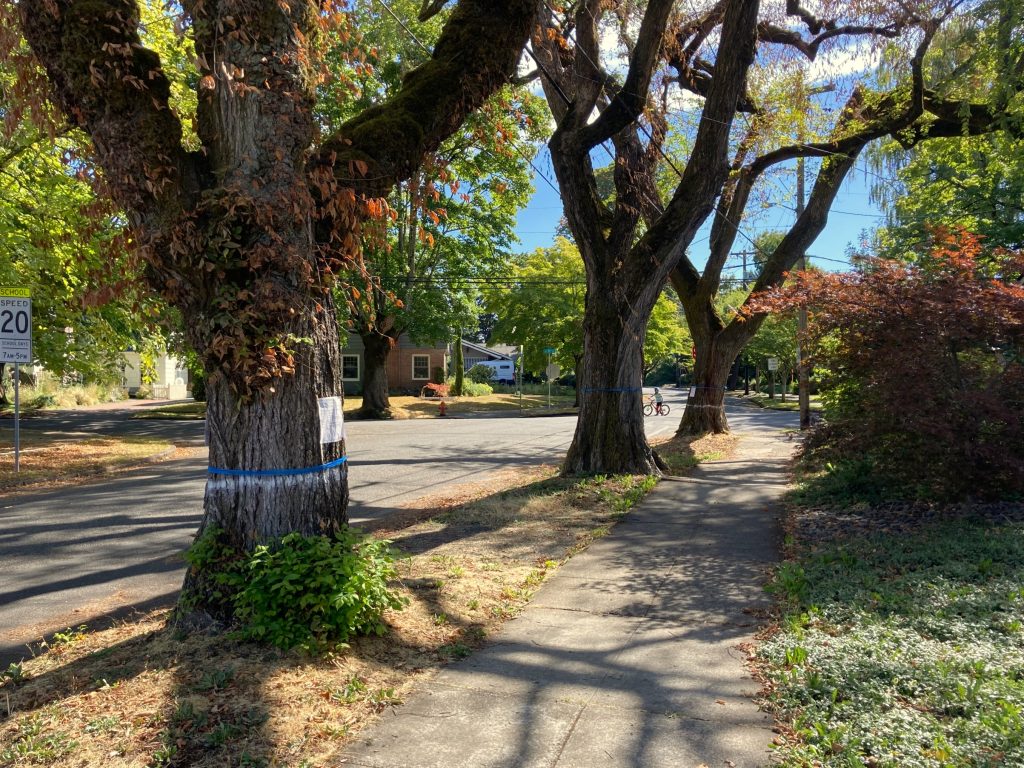
Healthy trees make neighborhoods more welcoming, comfortable, and valuable. They provide shade during hot weather, support wildlife, improve the appearance of streets, and create a stronger connection between homes and the natural environment. At the same time, trees that are diseased, structurally weak, poorly maintained, or damaged by storms can become a serious concern for residents. A tree does not need to fall completely to create danger. A large branch can damage a roof, block a driveway, hit a parked vehicle, disrupt utility services, or injure someone walking below. This is why working with a certified arborist Riverside NJ
The goal should always be to preserve healthy trees whenever possible while taking clear action when a tree becomes unsafe. A large tree is not automatically dangerous simply because of its size or age. Many established trees remain stable and beneficial for decades when they receive proper care. The real issue is the combination of a visible defect, the likelihood of failure, and what could be harmed if it fails. A tree with a weak trunk in an open field presents a different level of concern than a tree with the same weakness growing beside a home, sidewalk, playground, school entrance, parking lot, or power line. Tree risk management works best when it considers the condition of the tree and the people or structures within its potential fall zone.
Community awareness and early action
One of the strongest ways to protect a neighborhood is to encourage residents to notice changes in the trees around their homes. Many dangerous tree conditions develop gradually, which means there is often time to act before an emergency happens. A homeowner may see a newly leaning trunk, a large dead branch hanging above a driveway, cracks in the main stem, mushrooms near the base, exposed roots, or an area of soil that has started to lift. These signs do not automatically mean a tree will fall immediately, but they should never be ignored. They are reasons to request a professional inspection and understand whether the tree needs monitoring, pruning, treatment, support, or removal. Structural defects such as cracks, decay, weak branch unions, root problems, dead limbs, and poor architecture are recognized indicators that require careful risk assessment.extension.
Diseased trees deserve special attention because disease often changes both the health and stability of the tree. A tree may still have green leaves while decay is spreading inside the trunk or root system. Fungal growth at the base of a tree, soft wood, hollow areas, bark loss, repeated branch dieback, or a thinning canopy can all suggest that its internal structure is becoming weaker. In some situations, pruning can remove affected branches and improve air circulation through the canopy. In others, the disease has progressed far enough that the tree can no longer be considered reliable near homes and public spaces. The right response depends on the species, location, overall condition, and extent of decay, which is why a professional evaluation is more valuable than guessing based only on appearance.
Storms often reveal problems that were already present. Strong wind, heavy rain, ice, snow, and saturated soil can put extra pressure on trees with weak roots, dense crowns, or damaged trunks. After a major storm, residents may focus only on the branches that have already fallen, but it is equally important to inspect the trees that remain standing. A partially broken limb, a shifted root plate, a fresh crack, or a newly visible lean may leave a tree more hazardous after the storm than before it. Community tree risk guidance emphasizes that post storm assessment should be a priority because damaged trees can continue to fail after the weather has passed.
A neighborhood benefits when residents know the difference between a minor concern and an urgent hazard. A small dead twig near the outer edge of a canopy is usually not an emergency. A split trunk above a front entrance, a tree leaning toward a home after heavy rain, or branches tangled with electrical lines require prompt professional attention. If a tree or limb is touching power lines, homeowners should never attempt to cut or move it themselves. Utility related hazards can involve serious electrical risk and should be handled by trained professionals and the relevant utility provider. The safest approach is always to keep people away from the area until the hazard has been evaluated.
Regular maintenance is one of the most practical forms of prevention. Proper pruning removes dead, damaged, crossing, or poorly attached branches before they become a larger issue. It can also improve canopy structure and reduce excessive weight in areas that may be vulnerable during wind events. However, pruning must be done thoughtfully. Removing too much live growth at once can stress a tree, encourage weak regrowth, and make the canopy more vulnerable in the long run. Good tree care is not about cutting aggressively. It is about making precise decisions that support the tree’s health and reduce risks to the surrounding property.
Neighborhood protection also involves communication between neighbors. Trees do not respect property boundaries, and a branch that begins on one lot may hang over another person’s roof, driveway, or garden. When concerns arise, an early and respectful conversation can prevent disagreements later. Instead of waiting until a branch causes damage, neighbors can share observations, arrange inspections, and clarify who is responsible for maintenance. This approach helps maintain good relationships while protecting everyone involved. Trees are shared features of the neighborhood landscape, so their care often has a shared impact as well.
Protecting trees while reducing risk
Tree safety is not just about removal. In fact, the best neighborhood tree care plan protects healthy trees from avoidable stress while identifying truly hazardous ones before they fail. Construction activity is one of the most common sources of hidden damage. Digging trenches, installing driveways, changing drainage patterns, parking heavy equipment near a trunk, or raising and lowering soil levels can injure roots without creating an immediate visible problem. A tree may look fine for months or even years after construction, then begin to decline because its root system can no longer support its canopy. Tree protection guidance recommends continued inspection after construction because changes in tree condition, insect activity, and disease may take time to become visible.extension.
Protecting the root zone is especially important because roots are the tree’s anchor, water source, and nutrient system. Soil compaction can reduce the oxygen available to roots, while damaged roots may lead to poor growth, dieback, instability, or increased vulnerability to disease. When planning landscaping or building work, residents should think about the space beneath the tree as carefully as the branches above it. A healthy root zone makes a tree more resilient, while a damaged root system can turn an otherwise attractive tree into a long term concern.
The way a neighborhood responds to tree risk can also shape the quality of its public spaces. Municipalities, homeowner associations, parks departments, and local property owners all have a role in keeping sidewalks, streets, school areas, and common spaces safe. A systematic inspection process helps identify high priority trees before a storm turns them into an emergency. Risk management programs are most effective when they include regular assessment, clear priorities, corrective actions, emergency response planning, and periodic review. This kind of organized approach can reduce property damage, cleanup costs, and injuries while supporting a healthier urban tree canopy over time.
It is helpful to remember that removing a diseased or dangerous tree can sometimes protect the rest of the landscape. A severely infected tree may spread certain pests or pathogens to nearby trees, while a dead tree can become a source of falling branches and potential structural failure. Once removal is necessary, replacing it with a suitable species in a better location can restore long term benefits. Choosing a species adapted to the local climate, soil, available space, and expected maintenance level gives the replacement tree a much stronger chance of thriving without creating future conflicts with buildings, sidewalks, or utility lines.
Homeowners should not feel pressured to remove every tree that looks imperfect. Trees are living organisms, and small scars, uneven growth, or occasional dead branches are part of their natural life cycle. The key is to act when warning signs suggest that normal maintenance is no longer enough. A qualified professional can determine whether the issue is manageable through pruning, treatment, cabling, monitoring, or whether removal is the safest option. That balanced approach helps preserve the environmental and visual value of trees without overlooking genuine safety concerns.
Protecting local neighborhoods from diseased and dangerous trees is an ongoing effort built on observation, communication, and timely care. A healthy urban canopy does not happen by accident. It depends on residents recognizing changes, property owners maintaining their trees, professionals assessing serious risks, and communities treating tree safety as part of responsible property care. When a problem is identified early, there is often a chance to save the tree or reduce the danger before it causes harm. When removal is the right choice, making that decision before a storm or structural failure protects homes, families, neighbors, and the long term beauty of the entire community.