
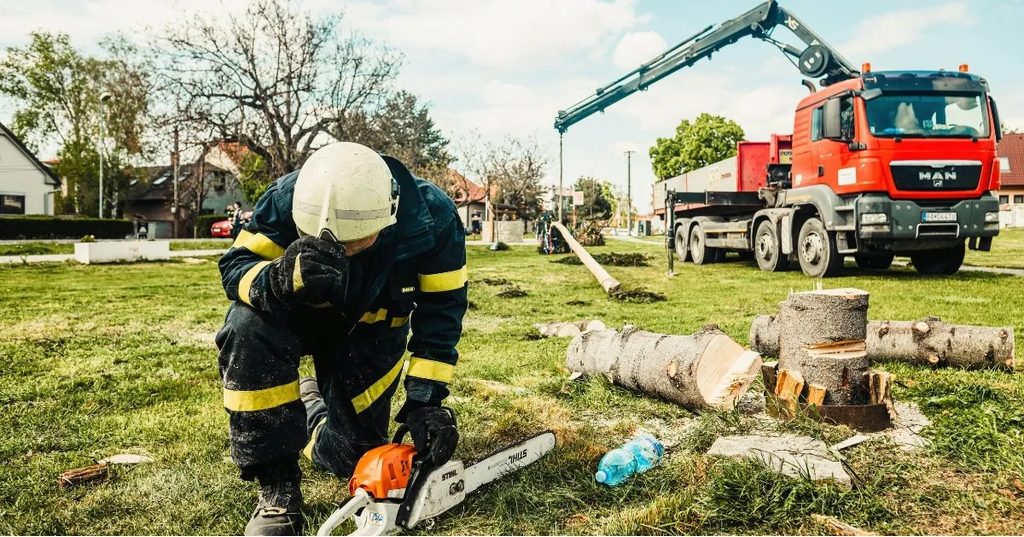
Every year, the same scene repeats across South Jersey. A summer thunderstorm or an early snow pulls down limbs, blocks an entrance, and sends property managers searching for a phone number they never saved. The work gets done, but it is rushed, expensive, and hard to compare. For commercial sites in Riverside and the surrounding towns, commercial tree services nj should be a relationship established before the first warning, not a number found in a panic.
A storm plan starts with a map. Mark the entrances, the main parking areas, the buildings, the utility lines, and the trees that could affect any of them. Decide which areas must reopen first and which can wait. That priority list prevents a crew from spending the first hour on a decorative tree while the main driveway is still blocked.
The next step is a written agreement with a tree company that knows the property. It should include response times, after-hours contact, hourly or per-job rates, equipment, and disposal. Ask how the company handles a widespread event when every client calls at once. A vendor who promises immediate service for everyone is either new or not being honest.
What to arrange before the first warning
Pre-season pruning is the cheapest storm protection. Remove deadwood, thin dense crowns, and correct structural defects before the wind tests them. The work is planned, the price is normal, and the debris is gone before the storm. A crew that only appears after the damage is a repair service, not a prevention service.
Access matters as much as the crew. Make sure gates, fire lanes, and utility areas can be reached by trucks and equipment. Trim low branches over driveways before they become an obstacle. If a crane or bucket truck may be needed, confirm that the ground can support it and that parked cars will not be in the way.
Coordinate with utilities and emergency services. The tree crew cannot work near live wires, and the utility has its own schedule. If a road or lane must close, the police or public works department may need notice. A plan that ignores those approvals can stall at the worst moment.
Communication with tenants and customers should be ready before the storm. Draft a message that explains what to do, where to park, and how to report damage. Designate one person to coordinate with the tree crew and one backup. A clear contact list is worth more than a stack of business cards when the power is out and the phones are busy.
Keep a written record of every call and decision. The timeline matters for insurance and for the next storm. A simple log with time, location, action, and cost is enough, and it takes less effort than reconstructing the events weeks later.
How to handle the first 48 hours
Safety comes before cleanup. Stay away from downed wires, assume they are live, and call the utility before touching anything near them. Keep people out of the affected area and use cones or tape to mark the perimeter. A tree that is still standing may be under tension, and a wrong cut can send a limb in an unexpected direction.
Triage the damage. Separate hazards that threaten people or buildings from debris that is merely inconvenient. Photograph everything before removal, including the tree, the damage, and the surrounding area. Those images support insurance claims and help explain why a decision was made. The first hour of documentation can save months of argument, and it costs only a few minutes.
Call the tree company with specific information. Describe the location, the size, the damage, and whether the area is accessible. Send photos. Ask for an estimated arrival time and a price range before work begins. If the crew asks for a blank check, find another crew. Emergency work is expensive, but it does not have to be opaque.
Beware of storm chasers. After a major event, out-of-town crews appear with chain saws and cash-only offers. Some are legitimate, but many disappear before the cleanup is finished. Ask for insurance, a local address, and a written estimate. A low price from a stranger can become a high price when the damage is done, especially if the work is incomplete or unsafe.
Photograph the damage from several angles before cleanup, including the tree, the affected structure, and any vehicles. Keep receipts for emergency work and disposal. Insurers may ask for proof that the work was necessary and that the cost was reasonable. A dated file answers those questions faster than a verbal explanation.
Debrief after the event. Ask the crew what took longer than expected, which access points failed, and what equipment was missing. Update the map and the contact list. The debrief is how a storm plan improves instead of repeating the same problems.
Keep a storm kit for the property. Cones, caution tape, flashlights, a printed contact list, and a camera are cheap and useful when the power is out. The kit should live in a known location and be checked before the season. The best time to discover a dead flashlight is not during a blackout.
Assign someone to meet the crew on site. A familiar face speeds access and decisions, especially when a gate code or a parking restriction is involved.
The recovery is also a chance to improve. Replace the trees that failed with species better suited to the site, adjust drainage, and prune the survivors. Update the storm plan with what worked and what did not. The next event will come, and the property will be better prepared because someone wrote it down.
A storm plan is not a prediction of disaster. It is a way to protect people, property, and the business that depends on both. The best time to build it is on a quiet day, with a crew that already knows the site.